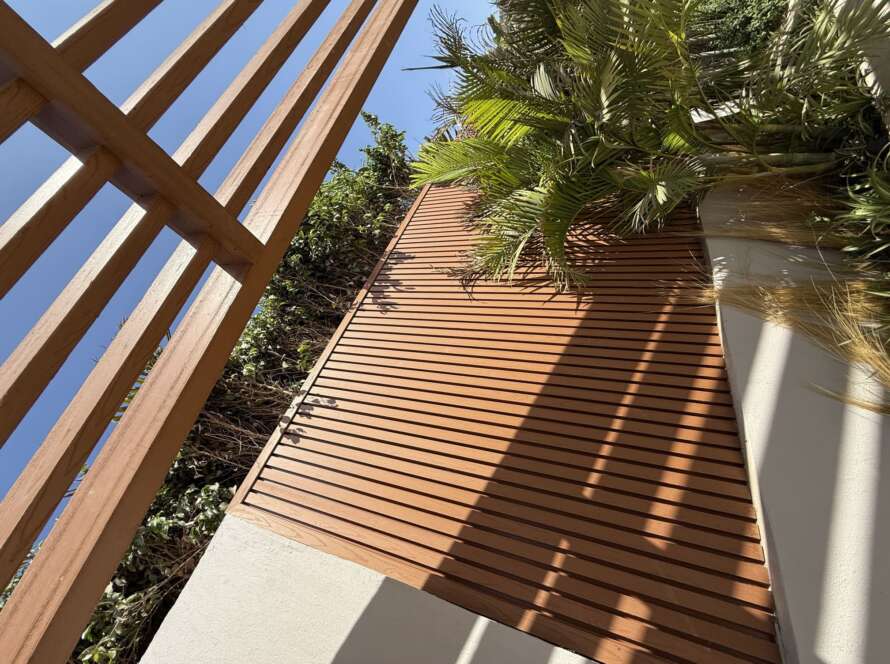
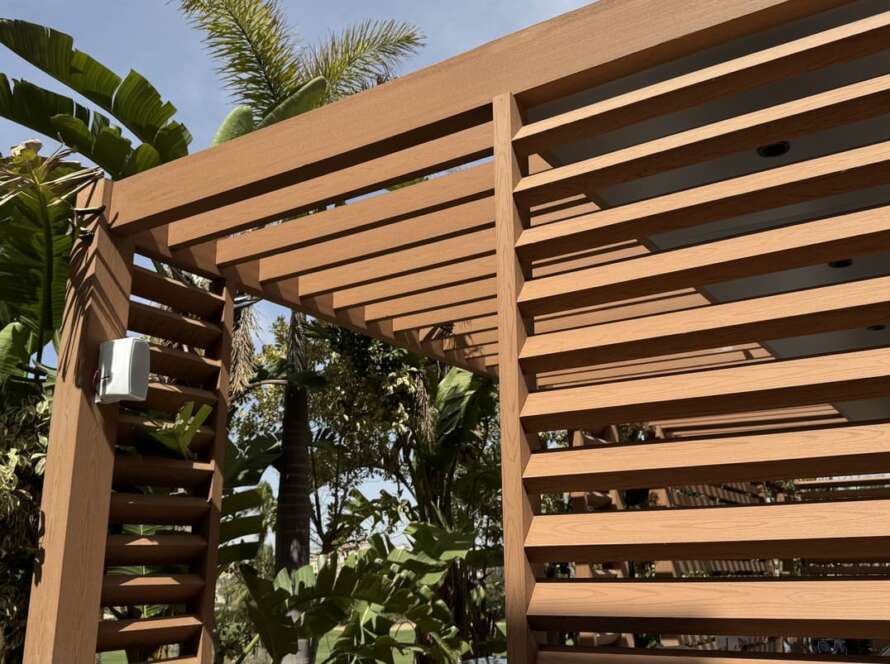
What Are Exterior WPC Walls?
WPC (Wood Plastic Composite) is a modern building material that blends wood fiber with polymer resins. The result is a surface that looks and feels like natural wood but performs far better outdoors.
Exterior WPC walls refer to any façade, cladding panel, or louver system applied to the outside of a building using WPC boards. They are increasingly popular in residential villas, commercial buildings, and compound projects across Egypt and the MENA region.
Why WPC Is the Ideal Choice for Exterior Walls
Before diving into enhancement strategies, it’s important to understand why WPC outperforms traditional materials like wood, stone cladding, or ceramic for exterior use.
Key advantages of WPC for exterior walls:
- Weather-resistant: stands up to sun, rain, humidity, and temperature shifts
- Rot and pest-proof: no warping, decay, or termite damage
- Low maintenance: no repainting, sealing, or sanding required
- Eco-friendly: made from recycled wood and plastic materials
- Aesthetic flexibility:available in multiple colors, finishes, and profiles
- Lightweight yet durable: easier to install without compromising strength
These properties make WPC an especially smart investment for Egypt’s hot, dry climate and coastal areas where salt air can damage traditional materials.
Smart Ways to Enhance Your Exterior WPC Walls
Here are the most effective, design-forward strategies for getting the best out of your WPC exterior.
1. Use WPC Cladding as Your Base Layer
WPC wall cladding is the foundation of any great exterior. It replaces plain concrete or plaster with a rich, wood-textured finish.
What makes WPC cladding effective:
- Creates a clean, natural aesthetic without the cost of real wood
- Available in horizontal and vertical installation patterns
- Covers imperfections in existing wall surfaces
- Suitable for villas, apartment buildings, commercial facades, and compound entrances
Pro tip: Choose a cladding profile with a micro-groove or brushed finish for added texture and visual depth.
2. Add WPC Louver Panels for Depth and Style
Louver panels are one of the most powerful tools in modern exterior design. When layered over cladding or used as standalone feature panels, they add dimension, shadow lines, and architectural character to any façade.
Benefits of WPC louvers on exterior walls:
- Create dynamic shadow effects that change throughout the day
- Provide partial shade and airflow ideal for hot climates
- Serve as privacy screens without blocking light entirely
- Work beautifully around windows, entrances, and balconies
- Available in multiple slat widths and spacing options
Louvers are especially popular in contemporary Egyptian architecture, where bold façade geometry is a key design trend.
3. Mix Colors and Textures Strategically
WPC comes in a wide range of colors from warm oak and walnut tones to cool greys and charcoal finishes. The key is intentional contrast.
Effective color-mixing tips:
- Pair dark WPC louvers with lighter cladding for a striking contrast
- Use warm wood tones on lower wall sections, neutral grey higher up
- Match WPC tones to window frames, gates, or outdoor furniture
- In coastal or resort projects, opt for sandy beige or driftwood finishes
Avoid using more than two or three tones on a single façade simplicity creates elegance.
4. Combine WPC with Modern Architectural Elements
WPC doesn’t have to stand alone. Its neutral, wood-like finish pairs exceptionally well with other contemporary materials.
Winning material combinations:
- WPC + white plaster the most popular villa combination in Egypt
- WPC + glass railings ideal for modern balconies and rooftop terraces
- WPC + metal framing creates an industrial-modern aesthetic for commercial facades
- WPC + exposed concrete bold and architectural for luxury developments
This layered approach elevates the overall design and makes your exterior look intentionally curated rather than simply clad.
5. Prioritize Quality Installation and Material Grade
Even the best WPC design falls flat with poor installation. Ensure your contractor uses:
- Proper subframe systems aluminum or galvanized steel rails to allow ventilation behind panels
- Concealed fasteners for a clean, screw-free surface finish
- Expansion gaps WPC expands slightly with heat; gaps prevent buckling
- Professional-grade WPC boards premium composite with UV stabilizers and co-extrusion coating
If you’re planning a full exterior upgrade, sourcing from a trusted supplier ensures both product quality and expert installation support. For outdoor flooring that complements your façade design, explore the best WPC decking in Egypt to complete a cohesive outdoor aesthetic.
WPC Exterior Walls in Egypt’s Climate: What You Need to Know
Egypt’s climate presents specific challenges for exterior materials intense UV radiation, high summer heat, occasional coastal humidity, and sandy desert winds. WPC is engineered to handle all of these.
What to look for in Egypt’s climate:
- UV-resistant coating: prevents fading and surface degradation under direct sun
- Co-extruded protective shell: adds an extra layer against moisture and abrasion
- Anti-slip profiles: (for ground-level cladding near pools or walkways)
- Dark colors absorb more heat in very sunny areas, opt for lighter WPC tones or ensure adequate wall ventilation
For privacy screens and decorative panels on building exteriors, consider the best WPC louver panels in Egypt to achieve that sleek, modern look while staying durable under local conditions.
Architects and developers working on compound villas, commercial facades, or hotel fronts across New Cairo, North Coast, Ain Sokhna, and Alexandria have increasingly adopted WPC for exactly these climate-specific reasons.
When selecting louver systems specifically for façade shading and architectural articulation, choosing the best WPC exterior louvers in Egypt ensures your design holds up beautifully for years with minimal upkeep.
FAQ
Q1: How long do WPC exterior walls last?
High-quality WPC cladding typically lasts 15 to 25 years when properly installed and maintained. Premium co-extruded boards with UV protection can last even longer.
Q2: Does WPC require painting or sealing?
No. WPC is pre-finished and does not need painting, staining, or sealing. Occasional cleaning with water and mild soap is all that’s required.
Q3: Can WPC be used on building facades in hot climates?
Yes. WPC is specifically engineered for outdoor exposure, including intense heat and UV radiation. UV stabilizers in premium boards prevent fading and surface degradation.
Q4: What’s the difference between WPC cladding and WPC louvers?
WPC cladding is a flat panel system used to cover and finish exterior wall surfaces. WPC louvers are slatted panels used decoratively or functionally for shading, privacy, or architectural detail. Both can be combined on the same façade for a layered look.
Q5: Is WPC a sustainable material?
Yes. WPC is made using recycled wood fiber and recycled plastic, making it one of the more environmentally responsible choices for modern exterior finishing.