In most Egyptian apartments—whether you’re in the heart of New Cairo, the bustling streets of Maadi, or overlooking the canal in Ismailia—the balcony is often the most underutilized square footage in the home. For many, it becomes a “storage room” for old AC units and cleaning supplies. But what if that small, dusty slab of concrete could become your favorite spot for morning coffee or evening sunsets?
Transforming a small balcony requires materials that are durable enough to handle the “Khamasin” dust and the Egyptian sun, yet stylish enough to feel like an extension of your living room. This is why WPC (Wood Plastic Composite) has become the go-to secret for urban homeowners. It offers the warmth of natural wood without the nightmare of maintenance, proving that you don’t need a massive garden to make a massive impact.
Why WPC Is the Smartest Flooring Choice for Egyptian Apartment Balconies
If you’ve ever tried putting a traditional outdoor rug or cheap wooden interlocking tiles on your balcony, you know the struggle. Within one summer, the rug is a dust magnet, and the wood is warped and bone-dry.
WPC is engineered specifically to solve the “apartment dilemma” in Egypt:
1. The Dust Factor
Let’s be real: Egypt is dusty. Traditional wooden decks have deep grooves and porous surfaces that trap fine sand, making them nearly impossible to clean. WPC is non-porous. A quick mop or a bucket of water, and your balcony looks like it was just installed.
2. Thermal Comfort
Unlike ceramic tiles, which can become scorching hot under the direct Egyptian sun, WPC has a different thermal conductivity. It stays significantly cooler underfoot, meaning you can actually walk onto your balcony barefoot at 3:00 PM without a “fire-walking” experience.
3. Water Drainage
Most Egyptian balconies have a slight slope for rain or cleaning water. WPC is installed on a hidden joist system, creating a small gap between the boards and the floor. This allows water to flow freely underneath to the drain, preventing the “standing water” issue that leads to mosquitoes and mold.
How to Transform a Small Balcony Using WPC Decking, Fencing, and Furniture
When space is limited, you have to think vertically and texturally. You can turn a 2×3 meter space into a luxury retreat by layering different WPC elements.
Create a Seamless Floor
Start from the ground up. Using high-quality WPC decking boards for balconies creates an immediate sense of luxury. By running the boards parallel to the longest wall, you can trick the eye into thinking the balcony is wider than it actually is.
Privacy Without the “Closed-In” Feel
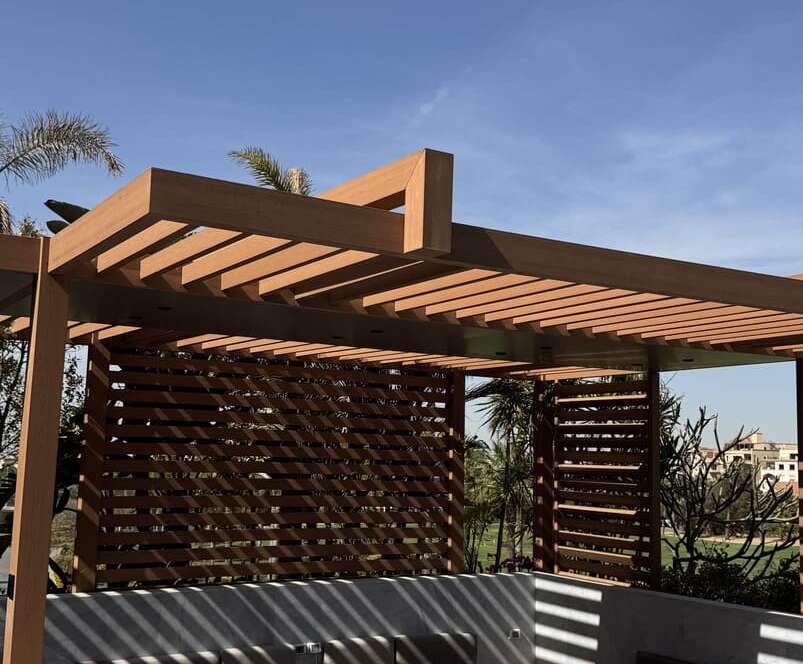
One of the biggest complaints about Egyptian apartment living is the lack of privacy from neighbors. Instead of a heavy brick wall or ugly plastic covers, consider WPC fence panels. These can be installed as a “screen” or a “trellis.” They block the view of the street or the building next door while still letting the breeze through. You can even hang small planters on them to create a vertical garden.
Accent Walls for Character
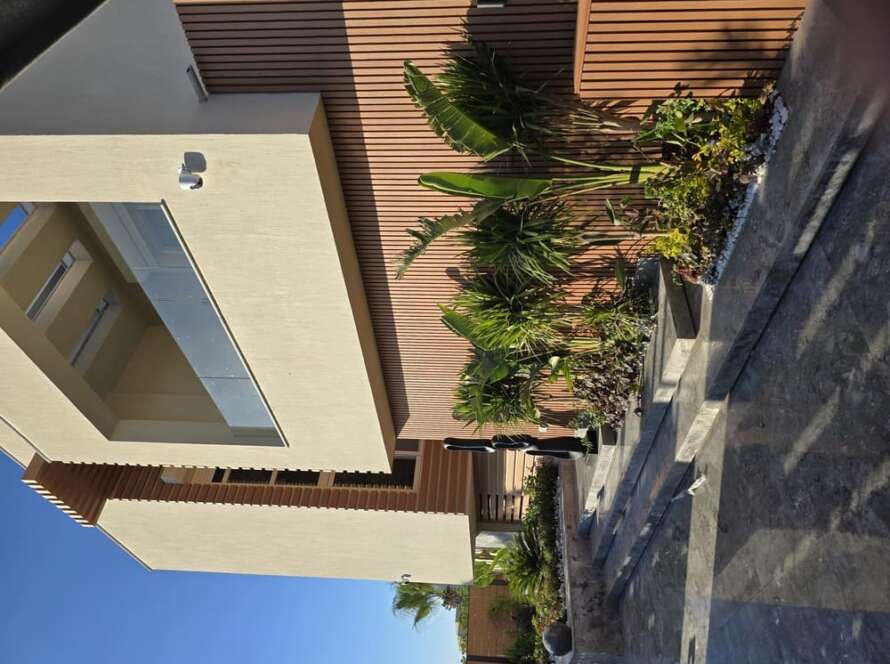
If your balcony walls look a bit tired or have cracked paint, you don’t need a full renovation. Adding WPC exterior wall cladding to just one “feature wall” adds depth and a modern architectural touch. It’s a trick used by top interior designers to make small outdoor spaces feel like high-end hotel terraces.
Practical Tips Before Installing WPC on Your Apartment Balcony in Egypt
Before you start picking out colors, here are the “professional” details you need to keep in mind to ensure your installation is a success:
- Check Your Levels: While WPC is great for hiding imperfections, if your balcony has major structural dips, your contractor will need to level the joists first. A flat deck is a safe deck.
- Color Selection: For west-facing balconies that get the brunt of the afternoon sun, we often recommend mid-tone colors like “Teak” or “Light Grey.” They hide dust better than dark chocolate colors and stay even cooler.
- The “Sweep” Clearance: Ensure there is enough clearance for your balcony door to swing open once the decking and joists (usually about 4–5 cm total height) are installed.
The WestWood Tip: A small balcony doesn’t mean small potential. With the right WPC choices, you can add an entire “extra room” to your apartment that stays beautiful for years.
Contact WestWood WPC today to see our range of colors and get a quote for your balcony makeover. Your coffee breaks are about to get a lot better
People Also Asked (FAQ)
Is WPC decking safe for apartment balconies in terms of weight?
Yes, absolutely. WPC is relatively lightweight compared to heavy stone or thick ceramic tiling. Since it is installed on a lightweight sub-frame, it distributes the weight evenly and is well within the load-bearing capacity of standard Egyptian building codes.
Can WPC be installed directly over existing balcony tiles without demolition?
This is one of the best parts! As long as your existing tiles are structurally sound, you do not need to break them. We simply install the WPC joists directly on top of the tiles. This saves you the noise, dust, and cost of demolition—which your neighbors will definitely appreciate.
How can I create privacy on a small open balcony using WPC?
The most effective way is using WPC louvers or fencing panels. You can install them to the height of the railing or slightly higher to create a “privacy screen.” Because WPC is weather-resistant, it won’t rot like bamboo or fade like fabric screens.
Is WPC suitable for west-facing balconies with intense afternoon sun in Egyptian summers?
WPC is highly UV-resistant. While everything in Egypt faces a tough battle with the sun, WestWood WPC uses advanced stabilizers to prevent the boards from becoming brittle or losing their color. It handles the 40°C+ summer heat much better than natural wood or PVC.
Do I need building management approval to install WPC on my balcony?
In most cases, no, because WPC installation is considered “removable” and doesn’t change the structural facade of the building. However, if you are doing a full wall cladding project, it’s always a good “neighborly” move to check with your building’s union, though most prefer it because it looks much cleaner than old paint!