If you’ve started researching WPC for your home or project in Egypt, you’ve likely run into a confusing crossroads: Should you go with Hollow or Solid boards? At first glance, they might look identical from the top, but beneath the surface, they are built very differently.
Choosing the wrong one isn’t just a minor mistake—it can be the difference between a deck that lasts 20 years and one that sags or cracks after just two Egyptian summers. In this guide, we’re breaking down the “inner world” of WPC to help you make the smartest investment for your space.
The Real Differences Between Hollow and Solid WPC That Most People Get Wrong
The most common misconception in the Egyptian market is that “Hollow is bad and Solid is good.” That’s like saying a sedan is bad and a truck is good—it depends on where you’re driving!
1. Structural Anatomy
The main structural difference between hollow and solid WPC boards lies in their core. Hollow boards are engineered with internal “honeycomb” or circular chambers. This makes them lighter and reduces the amount of material used. Solid boards, as the name suggests, are a dense, continuous block of composite material through and through.
2. Strength and Weight
Solid boards are significantly heavier and can handle much higher “point loads” (like heavy furniture or high guest traffic). Hollow boards are lighter, which makes them easier to transport and install, especially in apartments where you’re carrying materials up several flights of stairs.
Which WPC Board Type Should You Choose Based on Your Project in Egypt?
In Egypt, we have unique factors: extreme heat, specific architectural styles, and varying usage habits. Your choice should be dictated by the “mission” of the area you’re covering.
If you are building a commercial space—like a café in New Cairo or a beach club in Gouna you need the brute strength of solid boards. If you are simply looking to beautify a small balcony in a residential building, hollow boards might actually be the more efficient choice.
To make it even easier to decide, here is a quick breakdown of the technical differences:
Comparison: Hollow vs. Solid WPC Boards
|
الميزة |
Hollow WPC Boards | Solid WPC Boards |
|
Structure |
Internal air chambers (Honey-comb) |
Solid, continuous composite block |
|
Weight |
Lightweight (Easy for high-floor apartments) |
Heavy (Very stable and dense) |
|
Load Capacity |
Medium (Perfect for residential use) |
High (Ideal for heavy furniture/crowds) |
|
Cost |
More budget-friendly |
Higher investment due to more material |
| Best Use Case | Balconies and private gardens |
Pool decks and commercial venues |
Recommendation Summary:
- Choose solid WPC for:
- Pool decks (high moisture and bare feet).
- High-traffic walkways and commercial projects.
- Rooftop terraces with heavy pergolas or furniture.
- Choose hollow WPC for:
- Apartment balconies and private terraces.
- Garden pathways with low foot traffic.
- Budget-conscious residential projects.
How Egypt’s Summer Heat Affects Hollow and Solid WPC Differently
This is the most critical section for anyone living between Aswan and Alexandria. The Egyptian sun doesn’t just provide light; it provides intense thermal expansion that tests every material to its limit.
Hollow Boards: The “Fast-Cooling” Option
Hollow boards have air pockets inside. While air is a good insulator, if the boards are of poor quality, the difference in temperature between the hot outer shell and the air inside can cause internal stress. However, because they have less “mass,” they often cool down much faster once the sun sets, which is a great advantage during those warm Egyptian summer nights.
Solid Boards: The “Heat-Stable” Powerhouse
Solid boards, having more mass, hold onto heat longer (similar to a stone wall). However, they are much more structurally stable when it comes to expansion and contraction. In areas with extreme temperature swings, a solid board is less likely to warp because it has a consistent density throughout, making it a reliable choice for exposed rooftop terraces.
Why UV Protection is the Real Game-Changer
When considering your flooring, the heat factor is why the quality of the polymer blend matters more than the shape. Whether you go hollow or solid, ensuring the material has high-grade UV stabilizers is what keeps it from becoming brittle.
This attention to quality shouldn’t stop at your feet; if you are adding vertical shading or privacy screens, you must ensure your provider is using the best WPC louver panels in Egypt to match that same level of heat resistance and durability.
Vertical Applications and Lightweight Solutions
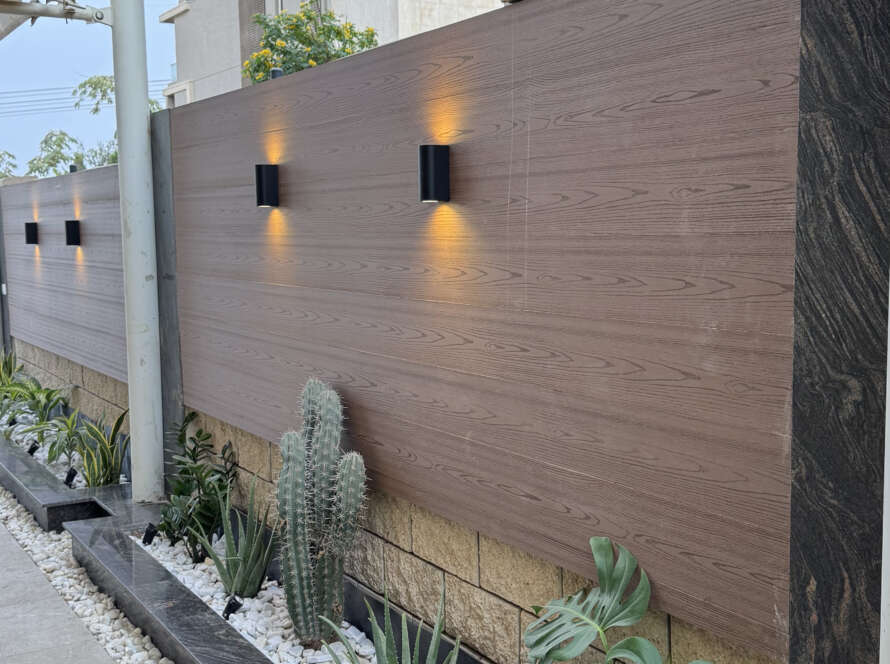
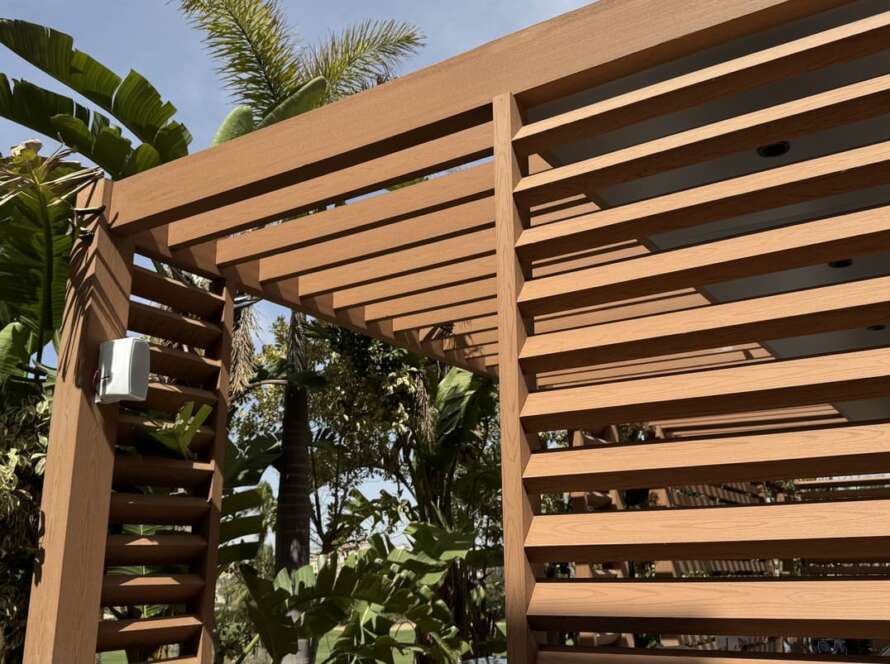
For vertical structures, weight is often the deciding factor. Louver panels often use a hollow-style profile to keep the weight off the structure while providing the premium look of solid wood. Similarly, for building exteriors, WPC wall cladding is typically designed to be lighter because it doesn’t need to support the weight of people walking on it, ensuring a safe and long-lasting installation on your building’s facade.
The WestWood Tip: Don’t let the “hollow vs. solid” debate paralyze your project. Both are fantastic upgrades over traditional wood. If you’re still not sure which one fits your budget and your balcony,
Contact WestWood WPC today for a hands-on consultation. We’ll show you the samples and help you pick the perfect “inner strength” for your outer space!
People Also Asked (FAQ)
Which type is stronger and more durable long-term?
Solid WPC is objectively stronger in terms of impact resistance and load-bearing capacity. If you expect heavy traffic or have heavy planters and furniture, solid is the more durable long-term choice. However, for light residential use, a high-quality hollow board is perfectly durable.
Is hollow WPC significantly cheaper than solid WPC?
Generally, yes. Hollow boards use less raw material and are cheaper to ship due to their lighter weight. This usually translates to a lower price per square meter. If you are on a strict budget for a large residential garden, hollow WPC can offer a great “look” for less.
Which type should I choose for a pool deck area?
We almost always recommend Solid WPC for pool decks. Pool areas involve wet surfaces, bare feet, and often heavy lounge chairs being dragged around. Solid boards feel “sturdier” underfoot and don’t have internal chambers where moisture could potentially sit if the end-caps aren’t sealed perfectly.
Does the “hollow” part make the boards loud when you walk on them?
Hollow boards can sometimes have a slightly “hollower” sound (hence the name) if the joist spacing is too wide. To prevent this, ensure your installer uses the correct spacing between the sub-frame beams. Solid boards sound almost identical to natural hardwood when walked upon.
Can I mix both types in one project?
Absolutely! Many smart homeowners use solid boards for the main walking “deck” and use hollow profiles for the surrounding decorative fences or wall features to save on costs without sacrificing the areas that matter most.