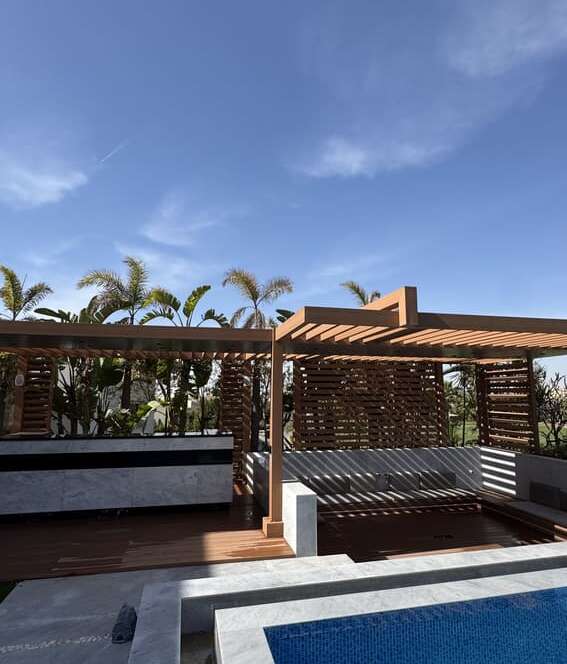
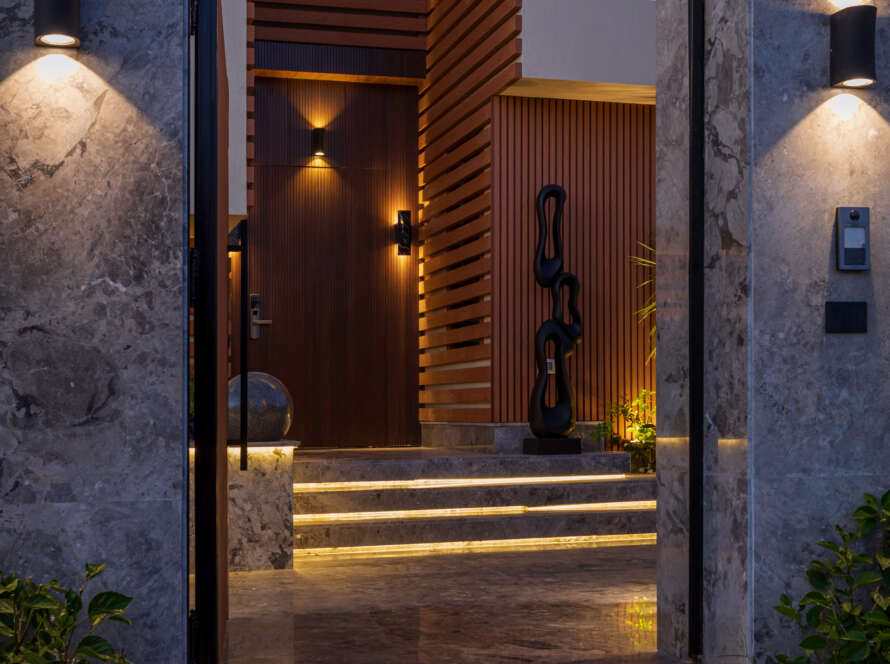
An outdoor pergola in Egypt has to survive a lot: months of direct summer sun, the dust that arrives with the khamaseen, and on the coast, salt-laden air that eats ordinary materials alive. That is exactly why Wood-Plastic Composite (WPC) has overtaken natural timber as the default choice for villas, compounds, rooftops, and resorts across the country. This guide walks you through everything that matters before you commit how to choose the right design, why WPC outperforms wood and even aluminium in our climate, how to pick an installer who won’t cut corners, and the engineering mistakes that quietly ruin a pergola within a season.
What a WPC Pergola Is and Why It Fits Egypt’s Climate
WPC is an engineered material made from wood fibres bound with treated polymers, manufactured specifically for outdoor use. It gives you the warm, natural grain of timber without the failure points that make real wood a poor bet in Egypt. Where natural wood cracks, warps, and fades under continuous sun and humidity, WPC holds its colour and shape for years with almost no upkeep no annual sanding, no repainting, no sealing.
For Egyptian conditions specifically, that translates into three things that actually matter:
- Summer heat (June–August): WPC resists the UV breakdown that bleaches and splits timber through the long, intense season.
- Khamaseen dust: A non-porous, washable surface means a hose-down restores the finish dust doesn’t grind into open grain the way it does with wood.
- Coastal exposure: On the North Coast and Ain Sokhna, moisture and salt destroy untreated wood and rust cheap fixings. Properly specified WPC is moisture- and insect-resistant and stays stable in that environment. We cover this in depth in our guide to WPC for North Coast Chalets.
The result is a structure that looks like wood, performs like a modern composite, and adds real, lasting value to the property rather than becoming a maintenance liability.
Choosing the Right Pergola Design for Your Space
A pergola is not one-size-fits-all. The best design starts with the space, not a catalogue. Work through four questions before anyone quotes you:
- What is the space like? Measure the shape, dimensions, and clear height especially near walls, parapets, and fences. Note the surface (concrete, tiles, grass, or a deck) and any fixed elements like trees, columns, AC units, or doorways. A good design works with these, not around them.
- How will you actually use it? A relaxation corner wants a semi-open frame for airflow and filtered light. A dining or hosting zone benefits from a more enclosed roof for sun and the occasional rain. A villa entrance calls for a sleek statement structure, while a walkway suits a long, rhythmic run of repeated columns.
- Where does the sun and wind come from? Sun path and prevailing wind decide orientation, tilt, and whether you need side louvers, curtains, or retractable shades. In hot zones you want denser shade and cross-ventilation; on the coast you prioritise wind resistance.
- Does it feel like part of the space? Match colours and textures to nearby walls, flooring, and landscape. Coordinated flooring is one of the easiest ways to tie everything together pairing the pergola with best WPC composite decking in Egypt creates a single, cohesive outdoor floor-to-roof language instead of a structure that looks added-on.
From there, the right add-ons turn a frame into a room: integrated lighting for evening use, sliding or louvered panels for privacy and glare control, and climbing plants for natural shade and seasonal texture.
WPC vs Natural Wood and Aluminium
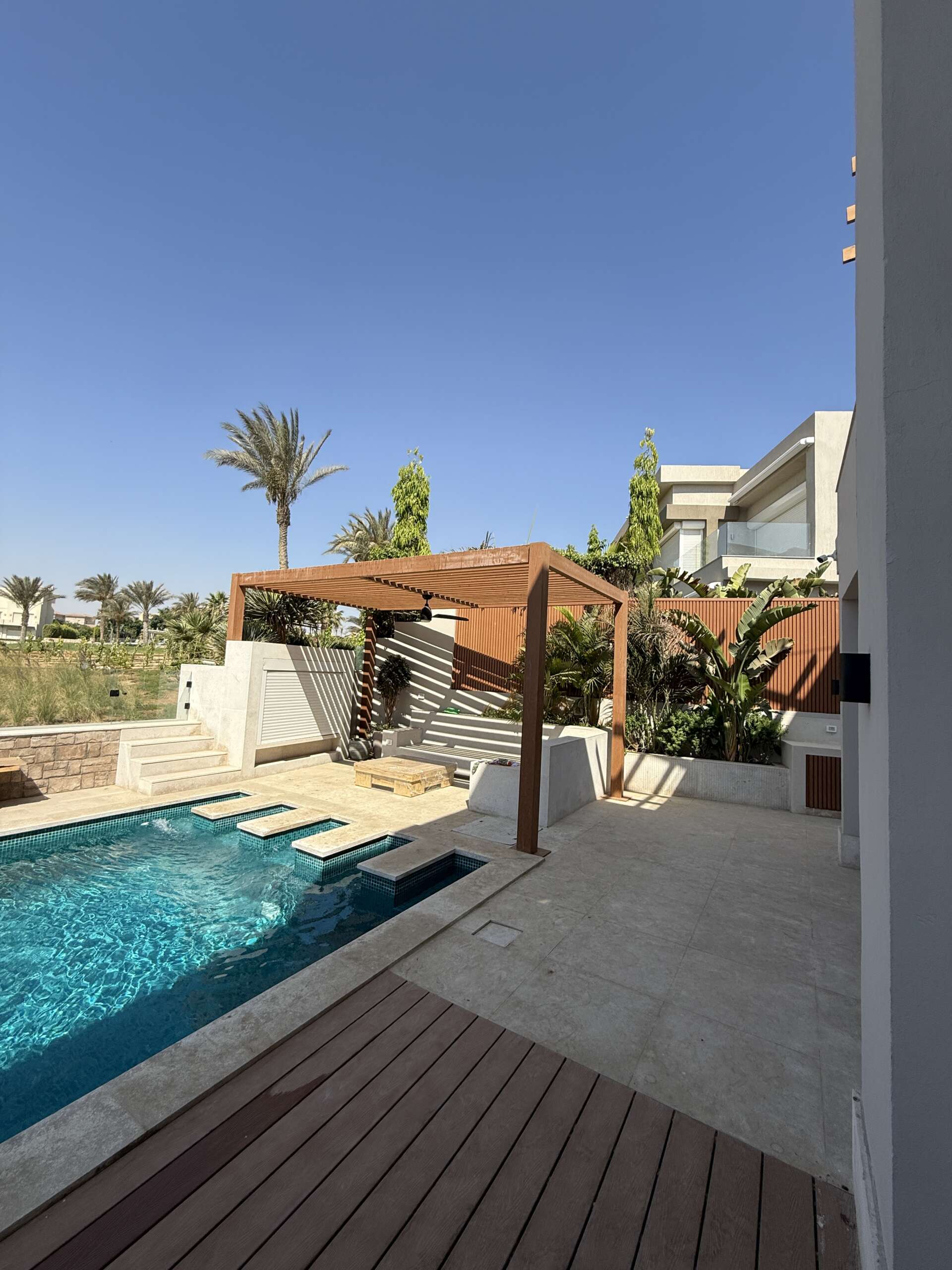
Most “pergola Egypt” guides quietly steer you toward aluminium because that’s what the company selling the guide makes. Aluminium is genuinely low-maintenance and rust-proof, but it reads cold and industrial, and on a hot day a metal frame and roof radiate heat. Natural wood gives the warmth people actually want, but it pays for that warmth with cracking, warping, insect damage, and a repainting bill every year or two punishing in a hot, humid, dusty climate.
WPC is the middle path that wins on both axes: the authentic wood look people want, with composite durability that shrugs off the weather. A common objection is heat and it’s a fair one for any dark outdoor surface. The answer is design and specification, not material panic: lighter tones, proper board spacing for ventilation, correct thermal-expansion gaps, and a roof slope all keep a WPC pergola comfortable through an Egyptian summer. Specified and installed correctly, it’s the lowest-total-cost, best-looking option for the long run, which is why it’s become the standard for the best WPC pergolas in Egypt.
How to Choose a WPC Pergola Installation Company in Egypt
The material is only half the result installation decides whether it lasts. When you evaluate companies, judge them on three things:
- Material quality and honesty. Ask for the wood-to-plastic ratio, request a physical sample, and confirm the boards are genuine outdoor-grade WPC, not a thin counterfeit that fades and loses shape in months. A serious supplier specifies materials clearly rather than waving at “premium wood.”
- A design approach, not a template. A professional team assesses your dimensions and intended use, proposes balanced proportions, and makes the structure feel integrated with the surrounding architecture not dropped in.
- Craftsmanship in the details. Structural alignment, clean and secure joinery, even beam spacing, and refined edge finishing are what separate a pergola that ages well from one that sags and gaps.
This is where experience and a track record matter. West Wood designs and installs WPC structures for outdoor environments across Egypt from rooftop seating and garden lounges to villa entrances, café terraces, and large developer and hospitality projects. The same standards apply whether it’s a private villa or a commercial brief; our WPC for Hotel and Resort Projects guide shows how the system scales for contractors and developers. With 50+ in-house treatment and installation specialists and nationwide coverage, the work is treated as a complete engineered system, not a quick alternative to timber.
Common WPC Pergola Installation Mistakes to Avoid
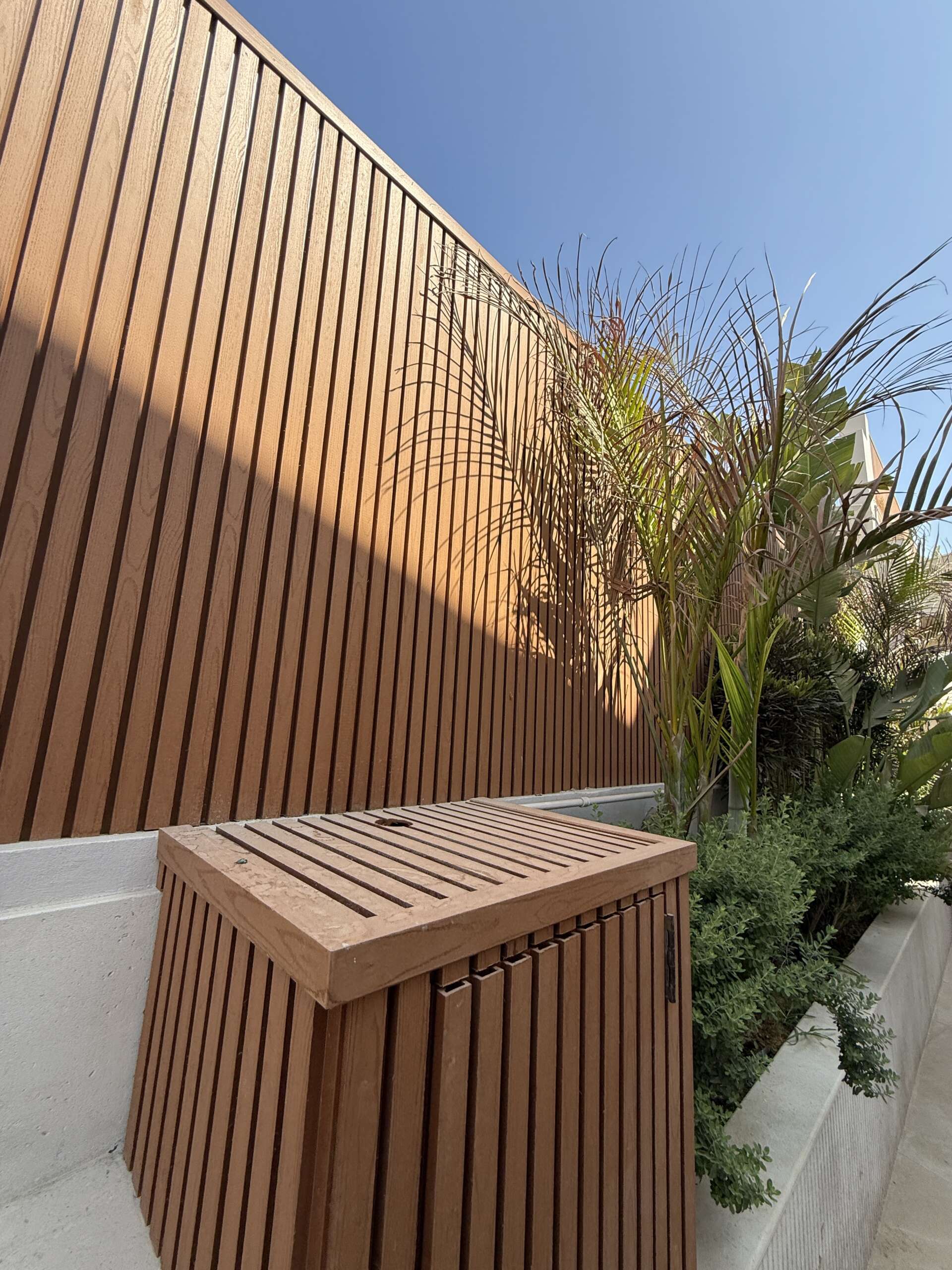
Even good material fails when the install is rushed. These are the errors that cause the most callbacks and how a professional avoids them:
- Building on uneven or untreated ground. A pergola needs a flat, reinforced base or it will wobble and tilt. The surface must be inspected and prepared first.
- No drainage slope. A dead-flat roof pools water. A slight, deliberate slope sheds rain naturally no pumps, no leaks.
- Cheap fixings. Standard screws and brackets rust within months, especially near the coast. Stainless steel or weather-treated aluminium fixings are non-negotiable.
- No plan or drawing. Installing “by eye” leads to misalignment and shade landing in the wrong place. A basic technical drawing with dimensions, height, and orientation comes first.
- Ignoring sun and wind. Poor placement blocks airflow or misses peak-hour shade. Both are studied on-site.
- Skipping expansion gaps. WPC expands and contracts with temperature critical in Egypt’s heat. Without correct gaps between boards, it cracks or deforms.
- Underestimating wind load. Light frames need deep footings or anchored base plates, particularly in open and coastal sites.
- Substandard or fake WPC. Verify certifications and the wood-to-plastic ratio before anything is ordered.
The thread running through all of these is the same: quality material plus disciplined, documented installation. Get both right and the pergola performs for years; get the install wrong and even the best boards won’t save it.
Bringing Your Outdoor Space to Life
A pergola is a structural component, not just décor and in Egypt’s climate, the combination of the right material, a design that fits your space, and disciplined installation is what separates a structure that lasts from one that disappoints. WPC gives you the warmth of wood with the durability our weather demands. To plan yours, browse West Wood’s project portfolio or request a quotation, and our team will help you specify the design, colours, and materials that suit your space.
Frequently Asked Questions
Is a WPC pergola better than wood for Egypt’s climate?
Yes. WPC keeps the wood look but resists the cracking, warping, fading, and insect damage that natural timber suffers under Egyptian sun, humidity, and dust with far less maintenance.
Do WPC pergolas get too hot in summer?
Any outdoor surface absorbs heat. With lighter colours, proper ventilation spacing, correct expansion gaps, and a sloped roof, a well-designed WPC pergola stays comfortable through the summer.
How long does a WPC pergola last?
Correctly specified and professionally installed, a WPC pergola lasts many years, significantly outliving traditional wood because it resists rot, pests, and structural weakening.
Does a WPC pergola need maintenance?
Very little no painting, sanding, or sealing. Periodic cleaning to remove dust keeps it looking new, which is a real advantage during the khamaseen season.
Can WPC pergolas be installed on the North Coast or Ain Sokhna?
Yes, and they’re well suited to it provided stainless or weather-treated fixings and a coastal-grade specification are used to handle salt air and moisture.