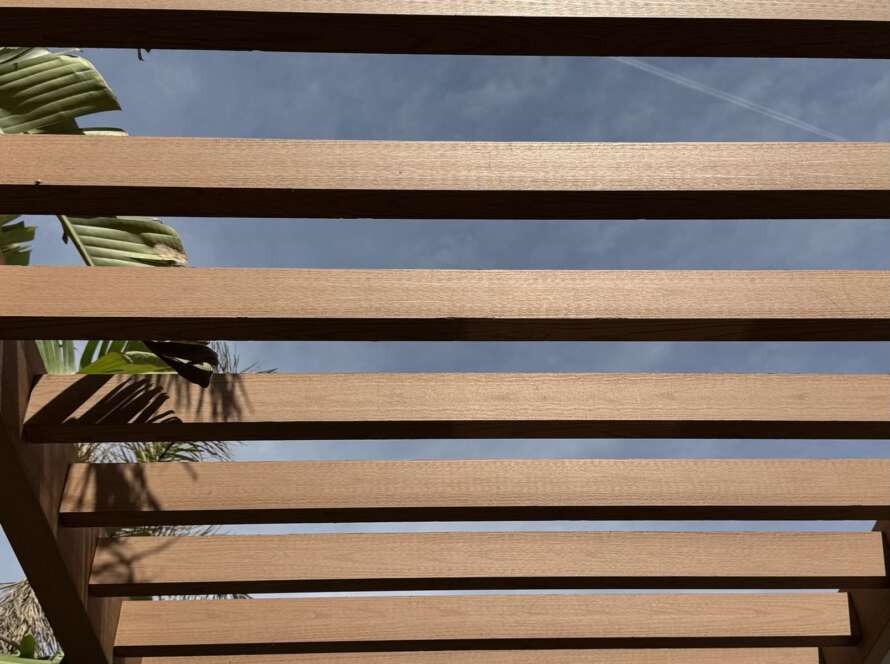
Let’s be honest: owning a chalet on Egypt’s North Coast (Sahel) is the ultimate dream until you actually have to maintain it. You head down for the weekend expecting relaxation, but instead, you’re greeted by a wooden deck that looks like it’s been through a mid-life crisis or a metal railing that’s more “rust” than “railing.”
The culprit? That lovely Mediterranean breeze. While it feels great on your face, it’s absolute chaos for traditional building materials. If you’re tired of the endless cycle of sanding, painting, and praying your deck survives another season, it’s time to talk about WPC (Wood Plastic Composite). At WestWood WPC, we’ve seen how the right material transforms a “maintenance nightmare” into a permanent sanctuary.
Why Salt Air Destroys Traditional Wood and Metal in North Coast Chalets
If you’ve ever wondered why your gorgeous wooden pergola looks grey and cracked after just one winter in Sidi Abdel Rahman, the answer is salt crystallization.
North Coast air isn’t just humid; it’s saturated with salt. When this salty mist settles on natural wood, the salt gets trapped inside the pores. As the water evaporates under the scorching 2:00 PM sun, the salt expands. This literally “blows up” the wood fibers from the inside out, leading to deep cracking, rot, and mold. Even metal isn’t safe; salt air acts like an electrolyte, speeding up corrosion until your “modern” balcony looks like an antique shipwreck.
To help you visualize the battle against the elements, here is how the most common materials stack up in the harsh North Coast climate:
Comparison: Traditional Materials vs. WPC in Coastal Areas
| الميزة | Natural Wood | Metal Fixtures | WestWood WPC |
| Salt Air Resistance | Poor (Pores trap salt/moisture) | Very Poor (Rapid rusting) | Excellent (Non-porous) |
| Sun Exposure | Cracks and warps quickly | Becomes scorching hot | UV-stable and cool-touch |
| الصيانة | Annual sanding and varnishing | Frequent repainting/treatment | Simple water wash only |
| Lifespan in Sahel | 3–5 years (before major repair) | 2–4 years (before rust sets in) | 15–25+ years |
| Guest Safety | High risk of splinters | Risk of rust stains/sharp edges | 100% Splinter-free |
Traditional wood requires annual sealing just to stay “okayish.” But let’s be honest: who wants to spend their first vacation day smelling like varnish when you could be at the beach?
How WPC Stands Up to the North Coast Climate Year After Year
This is where WestWood WPC enters the chat like a superhero. WPC is a sophisticated blend of recycled wood fibers and high-density polymers. It’s engineered to laugh in the face of the Mediterranean climate.
1. The “Salt-Proof” Shield
Unlike natural wood, WPC is non-porous. Salt air can sit on the surface all day, but it can’t get in. There are no fibers to split and no pores to trap moisture. You could practically soak a WPC board in the sea (though we don’t recommend it for fun), and it would come out exactly the same.
2. UV Resistance (The “No-Tan” Policy)
The Sahel sun is legendary. While natural wood fades to a sad, ghostly grey within months, our WPC products are treated with advanced UV stabilizers. Think of it as SPF 50 for your house—the color stays rich and vibrant, from June to September and beyond.
3. Zero Termites, Zero Hassle
Standard wood in coastal areas often attracts pests. WPC? Not so much. It doesn’t taste very good to bugs, meaning your structure stays solid for decades.
The Best WPC Products to Use in Your North Coast Chalet and Where to Use Them
To get that “luxury hotel” vibe without the luxury maintenance budget, you need to be strategic. Here’s how we recommend upgrading your Sahel home:
Elevated Pool Decks
Nothing ruins a pool day like a splinter in the toe. Using WPC pool decking ensures a slip-resistant, smooth surface that stays cool under the sun. It handles the splashes of chlorinated (or salty) pool water without warping.
Coastal Facades & Exterior Walls
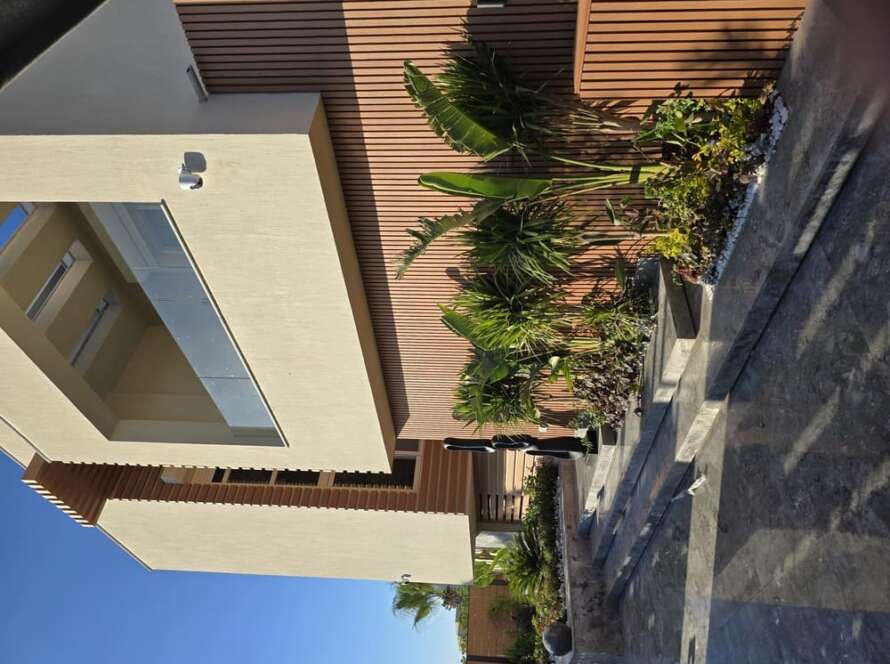
If you want your chalet to stand out in the compound, WPC cladding for coastal facades is a game-changer. It gives you the warmth of wood with the durability of stone. Take a look at our project in Dimora Village; we used WPC to create a sleek, modern look that handles the direct sea spray of the North Coast perfectly. It turned a standard unit into a premium architectural statement.
The Ultimate Terrace
For your main balcony or garden area, WPC composite decking is the gold standard. It creates a seamless transition from your living room to the outdoors. Whether you’re hosting a BBQ or just enjoying a coffee, it feels solid and premium underfoot.
The WestWood Tip: Don’t wait for the wood to rot before you make the switch. Investing in WPC today means more time on the beach and less time with a paintbrush in your hand. Just ask the residents at Dimora Village—once you go WPC, you never go back to “regular” wood!
Contact WestWood WPC today to get your free quote and start your maintenance-free summer.
People Also Asked (FAQ)
Why is salt air a problem for traditional wood and metal in North Coast chalets?
Salt is naturally corrosive. It draws moisture into wood, causing rot, and reacts with metal to cause rapid oxidation (rust). In the North Coast, the high humidity and wind speed make this process 10x faster than in Cairo.
Does WPC fade or discolor under the strong Mediterranean sun?
All materials face some sun exposure, but high-quality WPC is designed with UV inhibitors. While natural wood turns grey almost immediately, WestWood WPC maintains its color integrity for years, with only a very slight, intentional “weathering” in the first few weeks that settles into a permanent shade.
Is WPC suitable for seasonal chalets that are empty most of the year?
Actually, it’s perfect for them. If you leave a wooden deck for 9 months without maintenance, you’ll return to a disaster. WPC is “set it and forget it.” You can lock your chalet in October and come back in June; a simple wash with water, and it looks brand new.
What is the expected lifespan of WPC in a coastal North Coast environment?
You’re looking at 15 to 25 years or more. Compared to natural wood, which often needs replacing or heavy repair every 3–5 years in Sahel, WPC pays for itself twice over in saved maintenance costs.
How easy is WPC to install in an older chalet with an uneven surface?
It’s surprisingly easy! WPC uses a sub-frame system (joists). This allows our installers to level out the “skeleton” of the deck before clipping the boards on top. So even if your old concrete porch is a bit wonky, your new WPC deck will be perfectly flat and professional.